
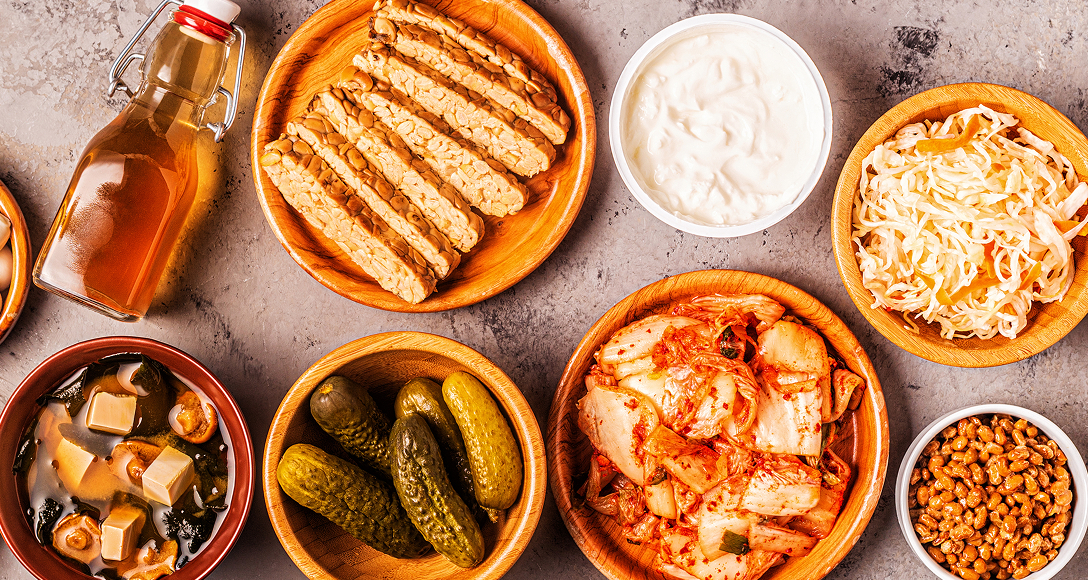
Fermentation has been part of human food traditions for generations. Today, scientific research continues to explore how these foods interact with the gut microbiome.
Fermented foods form when naturally occurring bacteria or yeasts convert sugars into organic acids and other compounds during fermentation.¹ In many cases, fermented foods also contain live microorganisms that may interact with the microbial communities living in the digestive tract.²
The gut microbiome refers to the diverse community of microorganisms that live in the digestive system. Research suggests these microbes play roles in digestive processes, immune signaling and metabolic functions that help maintain normal physiological balance.³
Interest in fermented foods has grown alongside scientific research exploring the microbiome.
In a 10-week clinical study, participants who consumed a diet rich in fermented foods experienced increased gut microbiome diversity along with reductions in several inflammatory proteins involved in immune activity.⁴
These findings contribute to a growing body of research examining how diet and microbial exposure may influence the gut microbiome. ⁵
Across North America, more people are embracing fermented foods for their distinctive flavours, cultural traditions and potential health associations, with probiotics — found in both traditional recipes and modern supplements — becoming an increasingly common part of daily wellness routines.²
From Fermented Foods to Targeted Support
Fermentation isn’t just a trendy food buzzword. It’s a natural process that has supported food preservation and dietary diversity for generations. ¹² During fermentation, naturally occurring microorganisms transform ingredients while creating distinctive textures and flavors.
These helpful organisms interact with the gut microbiome, the community of living microorganisms in your digestive tract. Research suggests certain probiotic strains may influence metabolic processes, digestive function and immune signaling.⁵
People worldwide have long enjoyed fermented favorites passed down through generations, each culture with its special staples.²
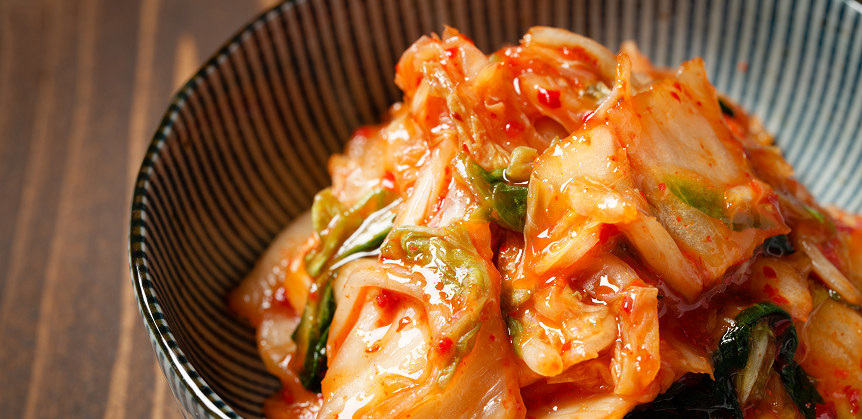
In North America, high-quality yogurts, kefir, sauerkraut and sourdough bread are now everyday staples. Kimchi appears at almost every Korean meal, bringing bold flavor and gut-friendly qualities.
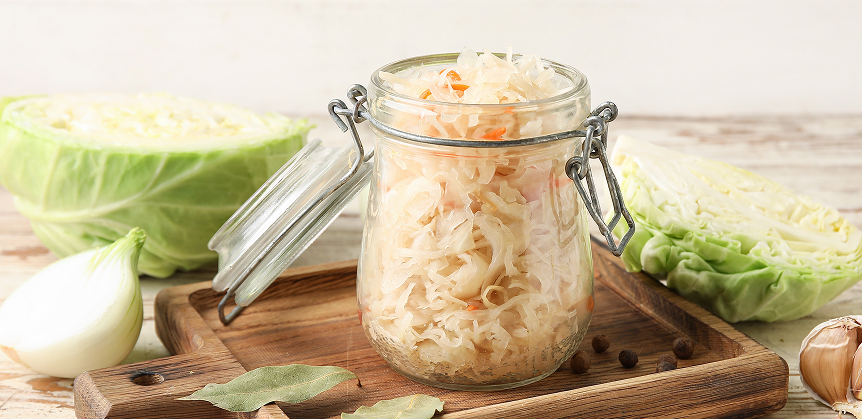
Across Eastern Europe, kefir and sauerkraut remain household essentials, valued for their tang and tradition. Ethiopians make injera — a sourdough flatbread from fermented teff — a daily anchor of their cuisine. Japanese cooking leans on miso and natto, both celebrated for rich flavor and natural probiotics.
These traditional foods provide microbial exposure and fermentation-derived compounds that may interact with the gut microbiome.²
Emerging research also explores the gut–skin axis. Reviews indicate that gut microbial balance may influence inflammatory pathways relevant to skin health.6,7 Some probiotic strains have been studied for their potential effects on immune signaling and inflammation.⁵
When the gut microbiome is balanced, systemic processes related to immune and inflammatory regulation may be affected.³
However, many commercially processed fermented foods may undergo heat treatment or filtration, which can reduce viable microbial counts, making consistent intake of live cultures from food alone variable.²
Fermented probiotics for everyday routines
That’s where Quoriom+™ comes in. The fermented liquid probiotic blends combine multiple probiotic strains in a convenient format designed to provide live microorganisms as part of a balanced lifestyle.
Quoriom+™ is a clean-label formula created to complement a balanced diet and healthy lifestyle.
Whether you are looking to add probiotics to your daily routine or simply incorporate live cultures into your day, Quoriom+™ offers a convenient option that can be enjoyed as part of a morning ritual or everyday wellness routine.
Quoriom+™ blends are crafted through small-batch fermentation using multiple probiotic strains, creating a rich microbial culture.
During fermentation, selected herbs and plants are incorporated into the formulation, bringing together live cultures and plant ingredients in a food-based approach designed for everyday routines.
One of the probiotic species commonly studied in research is Lactobacillus acidophilus, one of the strains included in Quoriom+™.5 A 2024 review examined how this species has been studied in relation to digestive processes, lactose metabolism and metabolic markers in human research.⁵
Quoriom+™ delivers billions of live cultures in each serving through a fermented liquid formulation.
Liquid probiotic formulations allow cultures to come into contact with the oral environment before continuing through the digestive system, offering an alternative format to capsules or powders.
Quoriom+™ Live Probiotics are designed to fit easily into daily routines. A serving of 30 mL (two tablespoons) can be taken on its own or mixed into a favorite beverage to provide live microorganisms that contribute to healthy gut flora as part of a balanced diet and lifestyle.
Building on centuries of fermentation knowledge, Wandler Probiotics combines traditional practices with modern quality standards in the development of its liquid probiotic formulations.
By drawing on the long tradition of fermented foods, Wandler Probiotics continues to develop probiotic products designed for everyday routines and balanced lifestyles.

A simple step toward better health
Whether you already enjoy fermented foods or are exploring probiotics for the first time, Quoriom+™ Live Probiotics offer a convenient way to incorporate live cultures into everyday routines.
Fermentation has shaped food traditions for centuries and continues to inspire modern research into the gut microbiome.1 From traditional kitchens to contemporary probiotic formulations, scientists continue to explore how microbial communities interact with the body.⁵
At Wandler Probiotics, Quoriom+™ reflects this ongoing connection between traditional fermentation practices and modern probiotic development.
*If you are managing IBS, IBD or another medical condition, consult your health-care provider to ensure Quoriom+ is right for your treatment plan.*
References
- Leeuwendaal NK, Stanton C, O’Toole PW, Beresford TP. Fermented foods, health and the gut microbiome. Nutrients [Internet]. 2022 Apr 6;14(7):1527. Available from: https://pubmed.ncbi.nlm.nih.gov/35406140/
- Rezac S, Kok CR, Heermann M, Hutkins R. Fermented Foods as a Dietary Source of Live Organisms. Frontiers in Microbiology [Internet]. 2018 Aug 24;9. Available from: https://www.ncbi.nlm.nih.gov/pmc/articles/PMC6117398/
- Nasser Al-Habsi, Maha Al-Khalili, Haque SA, Elias M, Olqi NA, Tasnim Al Uraimi. Health Benefits of Prebiotics, Probiotics, Synbiotics, and Postbiotics. Nutrients. 2024 Nov 19;16(22):3955–5.
- Weaver J. Fermented-food diet increases microbiome diversity, decreases inflammatory proteins, study finds [Internet]. News Center. 2021. Available from: https://med.stanford.edu/news/all-news/2021/07/fermented-food-diet-increases-microbiome-diversity-lowers-inflammation.html
- Gul S, Durante-Mangoni E. Unraveling the Puzzle: Health Benefits of Probiotics—A Comprehensive Review. Journal of Clinical Medicine. 2024 Mar 1;13(5):1436–6.
- Gao T, Wang X, Li Y, Ren F. The Role of Probiotics in Skin Health and Related Gut–Skin Axis: A Review. Nutrients [Internet]. 2023 Jul 13;15(14):3123–3. Available from: https://www.ncbi.nlm.nih.gov/pmc/articles/PMC10385652/
- Munteanu C, Turti S, Sorin Marian Marza. Unraveling the Gut–Skin Axis: The Role of Microbiota in Skin Health and Disease. Cosmetics [Internet]. 2025 Aug 8 [cited 2025 Aug 25];12(4):167–7. Available from: https://www.mdpi.com/2079-9284/12/4/167